Radon mitigation in Lehigh County is not optional for most homes, it is a critical health safeguard in one of the highest risk areas in the country.
Key Takeaways
| Question | Answer |
|---|---|
| How serious is radon in Lehigh County? | Lehigh County sits in EPA Zone 1, the highest risk category, and a large share of homes test above the 4.0 pCi/L action level. Our overview at Radon Mitigation Lehigh County explains why local geology matters. |
| What does radon mitigation typically cost? | Most standard systems in the Lehigh Valley fall between $1,200 and $2,500. In Germansville specifically, our 2026 guide shows typical installs in the $1,200–$1,800 range, as detailed at Radon Mitigation Cost Germansville. |
| Do I need testing before mitigation? | Yes, we always start with radon testing to understand your baseline levels. For Allentown residents, see our dedicated testing page at Radon Testing Allentown PA. |
| Is mitigation effective in Lehigh County’s high-risk zones? | Properly designed systems in Lehigh County routinely reduce radon by up to 99%, often bringing homes well below the 4.0 pCi/L action level. Our Germansville guide at Radon Mitigation Germansville PA explains how. |
| What if I am selling or buying a home and time is short? | We provide emergency testing and mitigation support for time‑sensitive real‑estate closings. Details are outlined at Emergency Radon Germansville. |
| Where can I see local data on radon in suburbs like Slatedale and Lynnport? | We publish town‑specific guides that cover local radon trends and mitigation options, such as Radon Services Slatedale PA and Radon Mitigation Lynnport PA. |
| How do I know which contractor to trust? | We explain how to compare local radon companies, typical systems, and expectations for results in our overview at Radon Companies Germansville. |
Why Radon Mitigation Matters So Much In Lehigh County PA
Lehigh County sits directly over the Reading Prong, a uranium‑rich rock formation that produces some of the highest household radon levels in Pennsylvania.
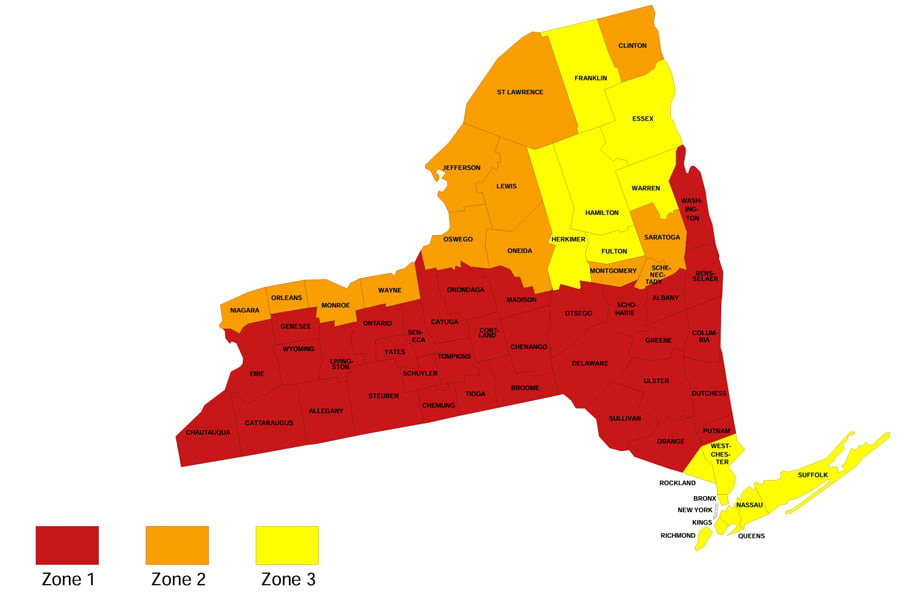
The EPA classifies this region as Zone 1, which means homes are more likely than not to exceed the 4.0 pCi/L action level without mitigation.
Across the Lehigh Valley, including Allentown, Bethlehem, Germansville, New Tripoli, Slatedale, and Lynnport, we routinely see homes test at two to ten times the EPA limit.
Without a mitigation system, that long‑term exposure significantly raises lung cancer risk, even for non‑smokers.
Radon Testing In Lehigh County: The First Step Before Mitigation
Every mitigation project we complete in Lehigh County starts with accurate testing, because we need to know how bad the problem is and where it is worst.
Short‑term tests help during real‑estate transactions, while long‑term monitoring provides a clearer year‑round average for homeowners planning ahead.
How Professional Radon Testing Works
We typically place calibrated testing devices in the lowest livable level of your home, away from drafts and exterior doors.
After the exposure period, usually 48 hours or longer, we collect and analyze readings in picocuries per liter, then provide a written report with clear guidance on next steps.
When Lehigh County Homes Should Be Tested
- After any major renovation, especially finished basements or additions.
- Before buying or selling a property anywhere in Lehigh County.
- Every 2 to 3 years in existing homes, even if a system is already installed.
- Immediately if neighbors report very high levels, since geology is shared.
Step‑By‑Step Infographic‑Style Overview: Our Radon Mitigation Process
To make radon mitigation in Lehigh County easy to understand, we follow a clear, repeatable process for every project.
Think of this as a visual checklist, from first phone call to final test, adapted to the Reading Prong conditions under your home.
Radon Mitigation Process Flow (Text Infographic)
| Step | What We Do | What You See |
|---|---|---|
| 1. Initial Assessment | Review your test results, home layout, and foundation type. | Phone or on‑site consultation, basic questions about your home and goals. |
| 2. Testing / Re‑testing | Confirm current radon levels if needed, especially after renovations. | Testing devices placed in your basement or lowest livable level. |
| 3. System Design | Plan a custom sub‑slab depressurization or crawlspace solution. | Simple diagram or explanation of where piping and fan will go. |
| 4. Installation | Drill suction point(s), run PVC piping, mount fan, and vent above roofline. | Visible exterior vent stack and quiet fan, usually completed in one day. |
| 5. Sealing & Finishing | Seal cracks, sump lids, and penetrations to support the system. | Cleaner, more airtight slab or crawlspace, with neat caulking. |
| 6. Post‑Mitigation Test | Run a follow‑up test to verify that radon dropped below target levels. | Written report with new reading, typically within a few days. |
| 7. Warranty & Follow‑up | Provide documentation, warranty, and recommendations for periodic re‑testing. | Peace of mind that your radon levels are controlled long term. |
Typical Timelines For Lehigh County Projects
Most residential mitigation projects take one working day on site, plus 2 to 7 days for follow‑up testing.
In emergency real‑estate cases, we prioritize scheduling so testing and installation fit within your closing timeline.
Radon Mitigation System Types Used Across Lehigh County
Because foundations vary across Allentown, Bethlehem, Germansville, and the surrounding townships, we match mitigation system types to your specific structure.
In Lehigh County, most installations rely on sub‑slab depressurization, but crawlspaces and split‑levels sometimes require hybrid designs.
Common System Types
- Sub‑slab depressurization for basements and slab‑on‑grade homes.
- Sump‑pit based systems that use the sump crock as a collection point.
- Sub‑membrane depressurization for dirt‑floor crawlspaces using sealed plastic sheeting.
- Combination systems when homes have multiple foundation types.
What We Aim For With Every System
Our goal is to create negative pressure beneath your slab or membrane so radon is captured and vented outside before it enters your breathing air.
We also design for appearance and noise, using neat routing and quiet fans so your system protects your health without disrupting daily life.
Radon Mitigation Costs In Lehigh County: What Homeowners Can Expect
Radon mitigation pricing in Lehigh County depends on your foundation type, system complexity, and finishing details, but you can still plan around realistic ranges.
From our cost data in Germansville and surrounding communities, most standard installations fall between $1,200 and $2,500.
Typical Price Ranges
| Home / System Type | Typical Price Range | Notes |
|---|---|---|
| Standard basement, single suction point | $1,200 – $1,800 | Common in Germansville and other Lehigh Valley homes. |
| Larger homes, multiple suction points | $1,800 – $2,500 | Needed when slab layout is complex or levels are very high. |
| Crawlspace with sub‑membrane system | $1,500 – $2,500 | Includes heavy‑duty plastic membrane and sealing work. |
What Is Usually Included
- On‑site evaluation and design for your specific Lehigh County property.
- Professional installation of piping, fan, and exterior vent.
- Sealing of slab cracks, sump lids, and penetrations as needed.
- Post‑mitigation test and a written report of the new radon level.
Town‑By‑Town Radon Risks In Lehigh County: Germansville, Bethlehem, Allentown And More
While the entire county is high‑risk, specific communities across the Lehigh Valley show slightly different patterns in test data.
Understanding those patterns helps us anticipate what we might find in your home and how aggressive your mitigation system needs to be.
Germansville And Northern Lehigh Townships
Germansville has recorded some of the region’s highest basement radon levels, often far above the EPA action level.
Homes here sit directly on the Reading Prong, so mitigation is almost always recommended once testing is completed.
Bethlehem, Allentown, New Tripoli, Slatedale, Lynnport
- Bethlehem properties, especially older homes on the hill, frequently test high due to fractured bedrock and older foundations.
- Allentown experiences elevated levels across many neighborhoods because the city sits squarely on the same geologic formation.
- New Tripoli, Slatedale, and Lynnport combine rural settings with high geological risk, so even newer homes can show very high readings.
Health Impacts Of Radon Exposure For Lehigh County Families
Radon is the second leading cause of lung cancer in the United States and the leading cause among non‑smokers.
In a high‑risk county like Lehigh, doing nothing with a 6, 10, or 20 pCi/L home means accepting decades of unnecessary risk for your family.
Why Radon Is So Dangerous
Radon itself is a gas, but the radioactive particles it decays into can lodge in your lungs when you inhale them.
Over years of exposure, those particles damage lung tissue and can eventually trigger cancer, especially in smokers or former smokers.
Why Local Action Is So Important
Because Lehigh County is EPA Zone 1, the odds that your home has a serious radon problem are much higher than the national average.
By testing and installing mitigation where needed, we convert an invisible long‑term risk into something measurable and controlled.
Emergency Radon Mitigation For Real Estate In Lehigh County
Real‑estate transactions in Lehigh County often hinge on radon results, because buyers know how common high levels are in this region.
When a pre‑closing test comes back high, you need a clear plan, a written quote, and a fast installation schedule.
What Counts As A Radon Emergency
- Imminent real‑estate closing with a test result above 4.0 pCi/L.
- Extremely high readings, for example 10–20 pCi/L or more, where occupants are already living in the home.
- Failed prior mitigation attempts that did not bring levels down adequately.
How We Respond In Time‑Sensitive Situations
We prioritize rapid testing confirmation, same‑week mitigation design, and installation that fits inspections and closing dates whenever possible.
We also provide clear documentation of the installed system and post‑mitigation test results so both buyer and seller have confidence in the solution.

Choosing A Radon Mitigation Company In Lehigh County
Because Lehigh County is such a high‑risk area, many homeowners want to know how to compare contractors and what to demand in writing.
We always recommend focusing on certification, clear testing before and after, and specific performance expectations.
What To Look For
- Experience working specifically in Lehigh County and the Reading Prong geology.
- Clear explanation of the system design, including fan size and vent routing.
- Written estimate that covers everything from sealing to post‑mitigation testing.
- Warranty on system performance and parts.
Questions To Ask Before You Sign
- What radon level are you targeting after mitigation in my home?
- How many suction points will my system use and why?
- How will you handle sump pits, crawlspaces, or finished areas?
- What does your warranty cover and for how long?

Long‑Term Maintenance And Re‑Testing After Mitigation
Once a radon system is installed and working, it needs only modest attention, but ignoring it entirely is not wise.
Fans can wear out over many years, sealing can deteriorate, and changes to your home can alter how soil gases move.
Simple Maintenance Steps
- Check the system’s warning gauge periodically to confirm suction is present.
- Listen for unusual fan noise, which can indicate wear or blockage.
- Keep the discharge point clear of obstructions like new additions or plantings.
Re‑Testing Guidelines For Lehigh County Homes
We encourage homeowners to re‑test every 2 to 3 years, even with an active mitigation system, to confirm levels remain low.
You should also re‑test after major renovations, foundation work, or finishing a basement, since these changes can alter radon pathways.
Conclusion
Radon mitigation in Lehigh County is a practical, proven way to manage one of the region’s most significant hidden health risks.
By testing, choosing a well‑designed system, and committing to periodic re‑testing, you protect your family in a high‑risk geological zone with a straightforward and reliable solution.